Tuesday, 24 January 2017

BioMaths Colloquium - 27/01/2017

BioMaths Colloquium Series - 2016/17

27 January 2017 - 3pm Maths Seminar Room

(room 224 Talbot Building 2nd floor)


Towards a richer evolutionary game theory

Professor John McNamara


(School of Mathematics,University of Bristol, UK


It is our pleasure to resume the BioMaths Colloquium Series for the winter term with a seminar by Professor John McNamara from the School of Mathematics at the University of Bristol. John is a mathematician with a keen interest in developing new methods and models for the study of animal behaviour. His work has markedly advanced the fields of behavioural and evolutionary ecology, including topics such as overwinter survival strategies, annual routines, adaptation to fluctuating environments and trans-generational effects, or the dawn chorus in birds, with a keen focus on investigating the ecological rationality of behavioural strategies and developing evolutionary game theory. John is a Fellow of the Royal Society, joint winner of the Hamilton Award of the International Society for Behavioral Ecology in 2008, joint winner of the Association for the Study of Animal Behaviour Medal in 2013, and winner of the Weldon Memorial Prize in 2014.


Abstract
from http://idcd.info/
Evolutionary game theory predicts and explains what will evolve in populations in which there are conflicts of interest between population members. To do so biologists make mathematical models which capture essential aspects of the underlying biology. These necessarily simplify the world, but are often too simple; for example, leaving out essential features such as the variation between individuals within a population, and ignoring how individuals gain information and interact with others. Much work also assumes an idealised world in which both the ecology of an animal and its psychological mechanisms are ignored. I argue that to understand the natural world we need models of greater richness. To do so I present a series of models that illustrate that adding richness can radically change predictions.


The discussions will continue over biscuits and tea/coffee after the seminar. 
Hope to see many of you!

Biosciences Seminar Speaker 26 January 2017

Biosciences Seminar Series - Winter 2017
26 January 2017 - 1pm - Zoology Museum


Microevolution in Pacific island white-eyes

Dr Sonya Clegg


Our seminar series continues for the winter term with a talk by Dr Sonya Clegg from the Zoology Department at the University of Oxford. Sonya is a Lecturer in Evolutionary Ecology interested in understanding the evolutionary processes that promote divergence in wild vertebrate systems. Specifically, her work clusters around three major lines of research. Using avian systems in the South Pacific region(New Caledonia, Vanuatu) Sonya investigates the processes that both promote and inhibit the generation of biodiversity. To understand the nature of phenotypic evolution, she quantifies the temporal dynamics of natural selection in an individually colour-ringed population of silvereyes (Zosterops lateralis chlorocephalus) in Heron Island on the Great Barrier Reef in Australia. Finally, Sonya investigates the dynamics of genomic divergence in island colonizing birds using members of the Zosteropidae family in Pacific Islands as study system.


Abstract
Clegg & Phillimore 2010
Biologists have a good understanding of the evolutionary processes required to generate divergence between populations. But why do some populations diverge rapidly from one another, while others do not?  White-eyes are excellent island colonisers and one of the 'great speciators', with numerous forms at different stages of divergence across the south-west Pacific region. In this talk I describe the patterns observed across island populations, along with my work identifying the relative roles of selection and drift in generating these patterns. I conclude by giving a summary of ongoing work and future plans investigating why a species that is a great disperser can rapidly lose dispersal ability once a new island is colonised, and how divergence in the presence and absence of gene flow may generate different genomic signatures.


Hope to see many of you - everyone most welcome to attend!


For the list of forthcoming seminars, see here, and here

Tuesday, 17 January 2017

Biosciences Seminar Speaker 19 January 2017

Biosciences Seminar Series - Winter 2017
19 January 2017 - 1pm - Zoology Museum


Improving marine management by accounting for spatial heterogeneity in management costs and stakeholder preferences

Dr Katrina Davis


Our seminar series resumes for the winter term with a speaker from Australia, Dr Katrina Davis from the Centre of Excellence for Environmental Decisions at the University of Queensland. Katrina is broadly interested in identifying ways to optimise natural resource use to maximise the productivity of human and ecological systems, e.g. by developing ways to include management costs into spatial planning, consider how to incorporate expert and stakeholder preferences and how to incorporate non-market valuation into spatial optimisation of marine resource use.  


Abstract
The exploitation of fish stocks has increased over time, as have negative impacts to the marine environment from anthropogenic activities. Subsequent deterioration in marine environmental health can be addressed by accounting for spatial heterogeneity in marine management costs and in stakeholder preferences for management. 

In this presentation, I will discuss how marine management in central Chile changes when monitoring and enforcement costs are taken into account, and why marine stakeholders may choose not to enforce locally managed marine resources despite the demonstrated benefits of doing so. I will also describe a survey which elicits spatially explicit non-market values for marine ecological features at a case study area in South-East Queensland in Australia. Results from this work demonstrate how the community can have spatially explicit preferences for marine management. 


Hope to see many of you - everyone most welcome to attend!


For the list of forthcoming seminars, see here, and here

Friday, 16 December 2016

BioMaths Colloquium - 16/12/2016

BioMaths Colloquium Series - 2016/17

16 December 2016 - 3pm Maths Seminar Room

(room 224 Talbot Building 2nd floor)


Modelling evolution in structured populations involving multiplayer interactions

Professor Mark Broom


(Department of Mathematics,City University of London, UK


from: Broom et al. 2015

This week we welcome Prof Mark Broom from the Department of Mathematics at City University London. Mark is interested in Mathematical Biology, especially in Evolutionary Game Theory. His research comprises theoretical work on games, such as the development of multiplayer game theory, as well as developing methods to model specific animal behaviours, for example prey signalling behaviour or kleptoparasistsm. In addition to journal papers and book chapters, mark recently (2013) published a book game-theoretical models in Biology.


Abstract
Within the last ten years, models of evolution have begun to incorporate structured populations, including spatial structure, through the modelling of evolutionary processes on graphs (evolutionary graph theory). One limitation of this otherwise quite general framework is that interactions are restricted to pairwise ones, through the edges connecting pairs of individuals. Yet many animal interactions can involve many individuals, and theoretical models also describe such multi-player interactions. 

We shall discuss a more general modelling framework of interactions of structured populations, including the example of competition between territorial animals. Depending upon the behaviour concerned, we can embed the results of different evolutionary games within our structure, as occurs for pairwise games such as the Prisoner's Dilemma or the Hawk-Dove game on graphs. Finally we consider some example population structures and evolutionary dynamics.


The discussions will continue over biscuits and tea/coffee after the seminar. 
Hope to see many of you!

Tuesday, 6 December 2016

Biosciences Seminar Speaker 08 December 2016

Biosciences Seminar Series - Autumn 2016
08 December 2016 - 2pm - Wallace Lecture Theatre (room 113)

note change of time and venue!


Securing the global aquatic food supply - a shared responsibility between producer and consumer nations

Dr Grant D Stentiford


Our speaker of this week, Dr Grant Stentiford Director of the European Union Reference Laboratory for Crustacean Diseases and Principal Scientific Officer and Team Leader of the Pathology and Molecular Systematics Team at Cefas Weymouth LaboratoryAfter a PhD in invertebrate pathology from the University of Glasgow, Grant has extensively worked on devising new and improved methods for the classification and early detection of disease in experimental, farmed and wild aquatic animals, especially of novel and emerging pathogens. For his work on aquatic animal pathology Grant combines clinical and molecular, to provide relevant results to aid national and regional responses to disease outbreaks in wild and farmed aquatic animals. Given his work, in 2008 the EC requested Grant to establish the first European Union Reference Laboratory for Crustacean Diseases (EURL) - an organisation that now coordinates 27 Member State National Reference Laboratories across the EU and has become a leader in crustacean pathogen diagnostics and is a globally recognised expert centre able to respond to disease outbreaks in farmed and wild animals.


Abstract
TBA


Hope to see many of you - everyone most welcome to attend!


For the list of forthcoming seminars, see here, and here.

Monday, 28 November 2016

Biosciences Seminar Speaker 01 December 2016

Biosciences Seminar Series - Autumn 2016
01 December 2016 - 1pm - Zoology Museum (Wallace 129)


The devil is in the details: on a quest for causality in ecology and evolution

Dr Achaz von Hardenberg

Photo by Yves Adams

Our speaker of this week, Dr Achaz von Hardenberg from the Department of Biological Sciences at the University of Chester (UK) will present his research on the links between parasites, behaviour life history variation and genetics in mountain mammals, using causal inference methods for ecological research. Achaz is a conservation ecologist, interested in behavioural ecology, population dynamics and conservation, especially of mountain ungulates and marmots. Previous to Chester, Achaz worked at the National Centre for Statistical Ecology (University of Kent, UK) and before going back to Academia, Achaz was as a research biologist and head of the science section at the Gran Paradiso National Park (GPNP, Northwestern Italian Alps), responsible for the long term ecological research and conservation projects in the Park.


Abstract
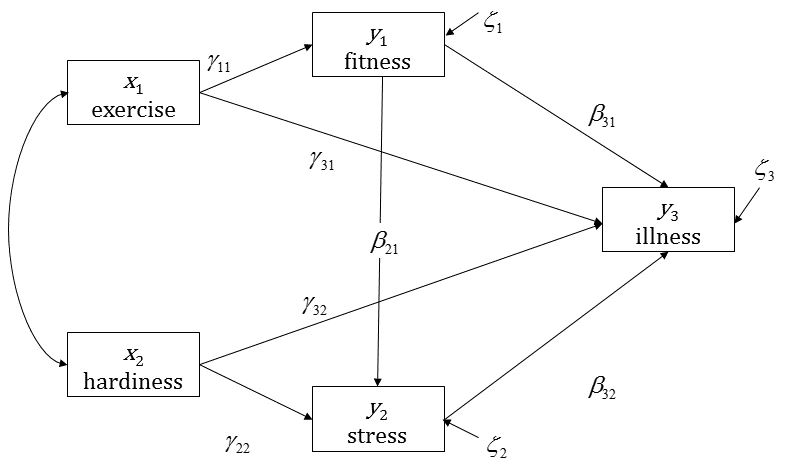
Disentangling cause-effect relationships is a primary, understated, goal in evolutionary biology and ecology. Controlled and randomised experiments, the golden standard in causal inference, can be used to study ecological and microevolutionary processes in the lab but are rarely applicable in ecological studies on wild populations, or when the interest lies in explaining the macroevolutionary processes behind the variability in traits among species. With few exceptions field ecologist and comparative evolutionary biologists thus renounce to make any inference about causality from their observational studies, resigning to the sobering precept - we all learnt during our undergraduate statistics courses - that correlation does not imply causation. 

However, recently new structural equation modelling (SEM) approaches have been developed, providing formal methods to specify and compare complex models of the relationships among ecological variables, in order to disentangle direct and indirect causal effects when only observational data is available. In this talk I will provide a short introduction to causal inference and show how we have applied these powerful methods to test causal models of the complex relationships between corticosteroid hormones, parasites, behaviour, genetic variability and life history traits in various wildlife species including Bighorn sheep (Ovis canadensis), Chamois (Rupicapra rupicapra), Alpine ibex (Capra ibex) and Alpine marmots (Marmota marmota). 

Recently we have also extended causal inference to phylogenetic comparative studies, developing a method for Phylogenetic Path Analysis which finally allows
evolutionary biologists to formulate causal models of hypothesised direct and indirect evolutionary relationships between life history, ecological and morphological traits in comparative studies taking into account the underlying phylogenetic signal. Finally I will discuss the potential of causal inference to provide better evidence to inform conservation.


Hope to see many of you - everyone most welcome to attend!


For the list of forthcoming seminars, see here, and here.

Tuesday, 22 November 2016

Biosciences Seminar Speaker 24 November 2016

Biosciences Seminar Series - Autumn 2016
24 November 2016 - 1pm - Zoology Museum (Wallace 129)


Hot dogs: understanding climate change impacts in a tropical mammal

Prof Rosie Woodroffe


Our speaker of this week, Prof Rosie Woodroffe from the Institute of Zoology at the Zoological Society of London, will present her research on the ecological drivers of an African carnivore, the wild dog (Lycaon pictus). Rosie's research is wide ranging and interdisciplinary, at the interface of conservation biology, wildlife management, disease ecology, and animal behaviour/behavioural ecology, and with a strong commitment to using science to influence both policy and conservation action. Whilst hence most of her research applied, not rarely has it lead also to advancements of basic ecological interest. 


Rosie's main research focuses on three themes. Regarding the conservation of wildlife that conflicts with people, an increasingly important topic in human-dominated landscapes, her work has focused on identifying the ecological drivers of human-wildlife conflicts (especially in African carnivores) and finding technical measures to resolve the latter. Her work on infectious disease in ecology and conservation has lead her to become one of the most important UK researchers on the contentious issue of the role of badgers in bovine tuberculosis (TB; e.g. see here). Her work on species conservation planning has led her to become part of the IUCN/SSC Task Force on Species Conservation Planning, coordinate the African wild dog working group of the IUCN/SSC Canid Specialist Group, and in drafting recovery plans and national management plans for endangered species across America and Africa.

Last, but not least, Rosie won the Science Slam at the 2015 BES Annual Meeting (see here), so we might well expect an engaging talk!


Abstract
Climate change imposes an urgent need to recognise and conserve the species likely to be worst affected. Physiologists predict direct impacts of rising ambient temperatures on tropical species, yet ecologists have mostly characterised indirect effects on temperate and polar species. In this talk I will describe direct impacts of high ambient temperatures on reproductive success in a tropical carnivore, the African wild dog (Lycaon pictus). 

High temperatures directly constrained wild dog packs’ foraging time, especially during the energetically-costly pup-rearing period. Packs which reared pups at high ambient temperatures produced fewer recruits, and took longer to produce their next litter, than did those rearing pups in cooler weather. Over time, rising temperatures coincided with falling wild dog recruitment, suggesting that climate change may already be impacting this endangered species. 

These impacts would have been missed by simplistic trait-based assessments of climate change vulnerability, highlighting a need for species-specific assessments where possible, especially among tropical wildlife.


Hope to see many of you - everyone most welcome to attend!

For the list of forthcoming seminars this term, see here, here, and here.